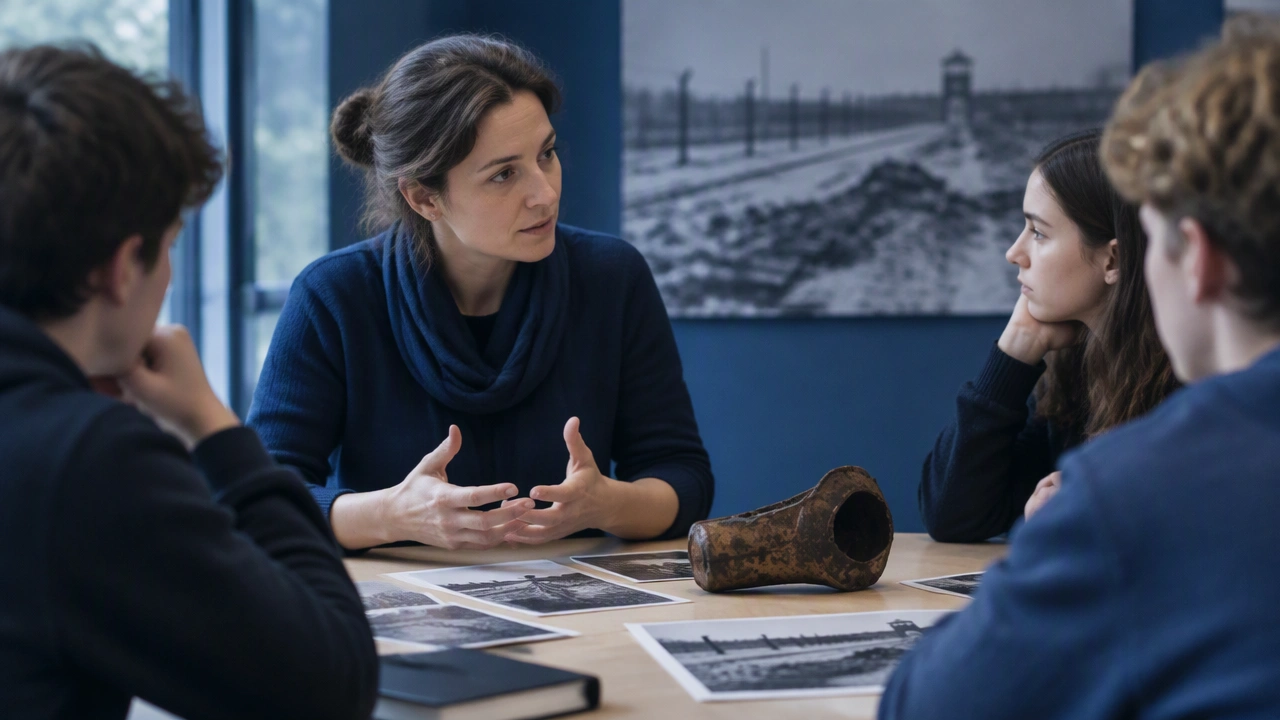
Teaching Sobibor Without Sensationalism: A Trauma-Informed Framework
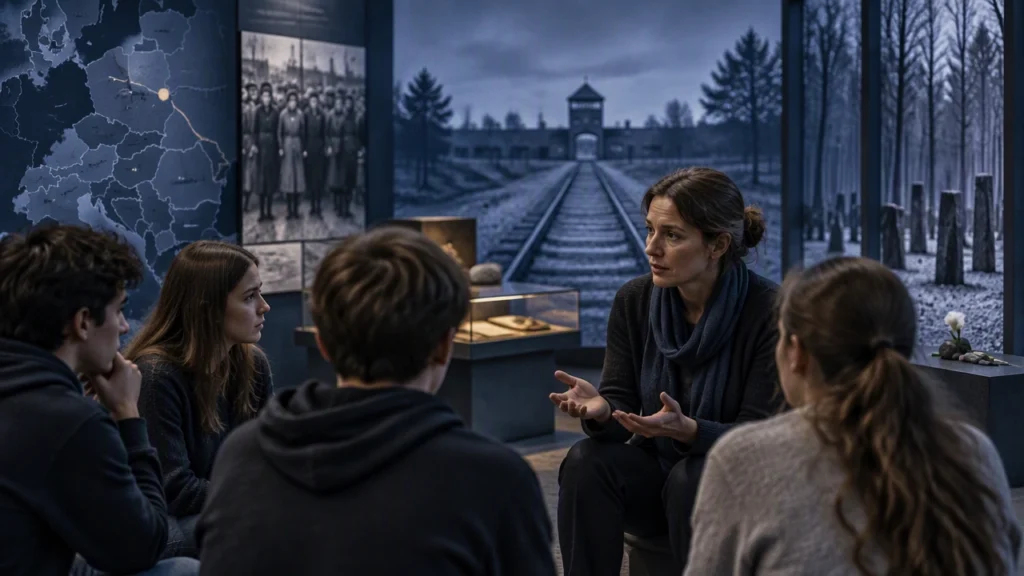
Teaching the history of Sobibor requires more than selecting facts and dates. It asks educators to hold together accuracy, dignity, and care for young learners. The long-tail question many teachers carry into the classroom is: How can teachers explain Sobibor without graphic or sensational content? A trauma-informed approach begins with a clear purpose: students should understand what happened, why it happened, and why remembrance matters, without being exposed to material designed to shock.
Begin with historical clarity
Sobibor was a Nazi killing center in occupied Poland, part of a broader system of persecution and mass murder. It was central to Operation Reinhard, the Nazi plan to murder the Jews of occupied Poland. Unlike a concentration camp organized primarily around forced labor, Sobibor was designed for the immediate killing of people transported there. Most of those murdered were Jewish men, women, and children; Roma and Sinti people, Polish civilians, and prisoners of war were also killed there.
The camp operated in stages. The first, smaller camp opened in 1942. After an uprising in October 1943 in which some prisoners escaped, the Nazis dismantled the site and attempted to conceal evidence. After the war, the site was neglected for decades. Archaeological research and memorial work later brought greater clarity to the scale and structure of the camp.
These details matter because they replace rumor with evidence. Teachers can present the history as a documented sequence: construction, mass murder, resistance, destruction, and later remembrance. This structure keeps the lesson focused on historical understanding rather than on graphic imagery.
Use a trauma-informed framework
A trauma-informed lesson does not assume that every student has experienced trauma, but it recognizes that difficult history can affect people in different ways. It also avoids asking students to imagine suffering as a way to create empathy. Empathy can grow through accurate information, human stories, and thoughtful reflection.
Prepare the room. Before the lesson, explain the subject directly and calmly. Tell students what they will learn, what sources you will use, and what the lesson will not include. Avoid surprise images or unannounced accounts of violence. Give students a chance to ask questions privately before or after class.
Center dignity. Describe people as people, not as anonymous victims. Use names, family relationships, occupations, and communities when reliable sources allow. Do not reduce individuals to the manner of their deaths. The goal is to restore the humanity that Nazi ideology tried to erase.
Separate fact from spectacle. Graphic material can create strong emotion without producing understanding. Select sources that show the machinery of persecution, the decisions that enabled it, and the experiences of those who resisted or helped others. A photograph of documents, a survivor testimony, or a map can be more instructive than an image chosen for impact.
Choose age-appropriate context
Age appropriateness is not about hiding history. It is about giving students enough context to process it responsibly. Younger students may need a simpler chronology and clear definitions of terms such as persecution, deportation, and genocide. Older students can examine propaganda, bureaucracy, collaboration, and the choices made by individuals and institutions.
When discussing the uprising, emphasize planning, courage, and the limits of what was possible under extreme conditions. When discussing survival, avoid implying that survival depended on personal merit. Many people who were murdered were no less brave or resourceful than those who escaped.
Teachers should also distinguish between established facts, historical interpretation, and open questions. Historians continue to study local histories, individual biographies, and the material remains of the camp. Presenting uncertainty honestly models good historical thinking.
Build a lesson sequence
A careful unit can move through four stages.
- Context: Explain the rise of Nazi persecution, the occupation of Poland, and the development of mass killing policies.
- Sobibor: Trace the camp’s construction, function, the uprising of 1943, and its later destruction.
- Voices: Use verified survivor testimony, testimony from witnesses, and documented evidence from the trial of camp personnel.
- Remembrance: Examine how memorials, archaeology, and education shape public memory today.
At each stage, ask questions that invite analysis rather than spectacle: What evidence supports this account? What choices did perpetrators make? How did prisoners maintain agency? How do memorials help communities remember without repeating harm?
Handle language and images with care
Use precise language. Say killing center or death camp when describing Sobibor’s function, and explain why the term matters. Avoid euphemisms that blur what happened, but also avoid sensational phrases that turn suffering into drama. Content warnings should be brief and factual: tell students what is coming and why it is relevant.
Limit visual material to images that serve a clear learning purpose. Prefer maps, documents, site plans, and survivor testimony. Do not use images of bodies as a default illustration. If a difficult image is essential, provide context first and a chance to step out or reflect afterward.
Assess understanding without distress
Evaluate learning through chronology, source analysis, and reflection rather than through personal disclosure. Students should not be required to describe how they felt about graphic content. They can instead explain what they learned about the camp’s purpose, the uprising, or the responsibilities of remembrance.
Close the lesson with a calm transition. Revisit the learning goal, remind students of support available at school, and offer a quiet question-and-answer period. The aim is not to leave students overwhelmed, but to leave them informed, thoughtful, and ready to remember with care.