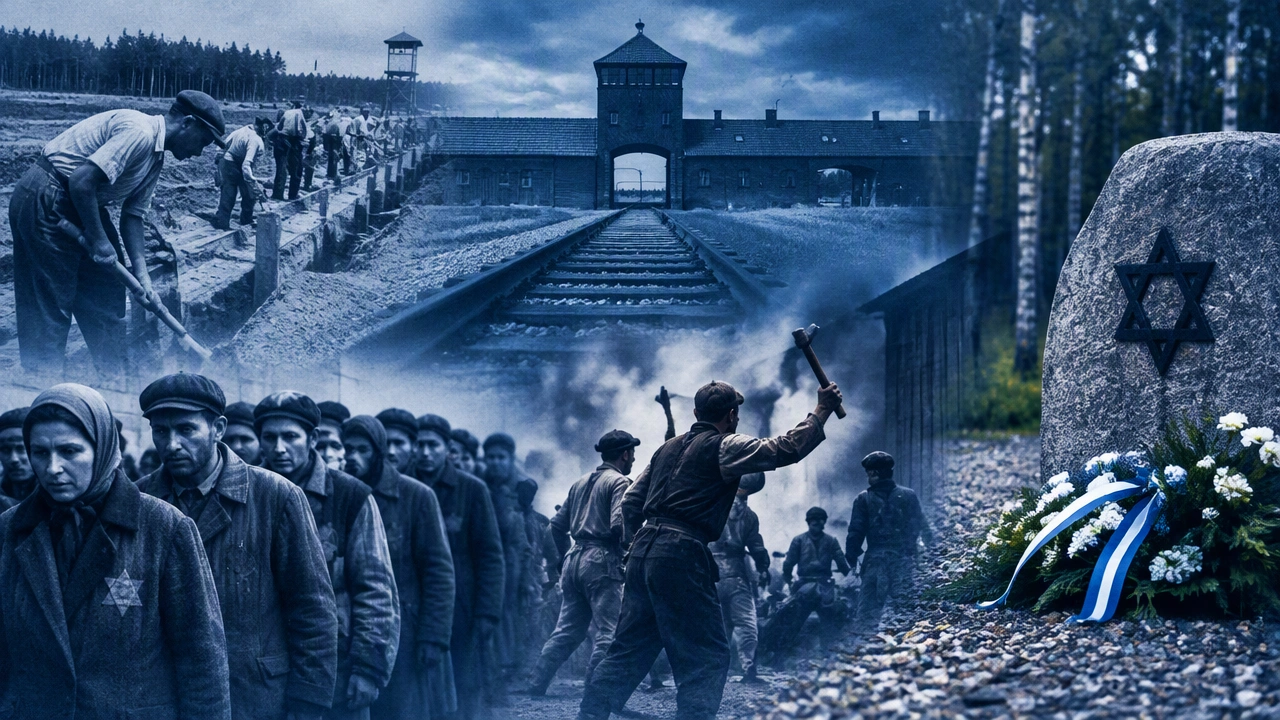
Sobibor History: Construction, Killing, Uprising, and Remembrance
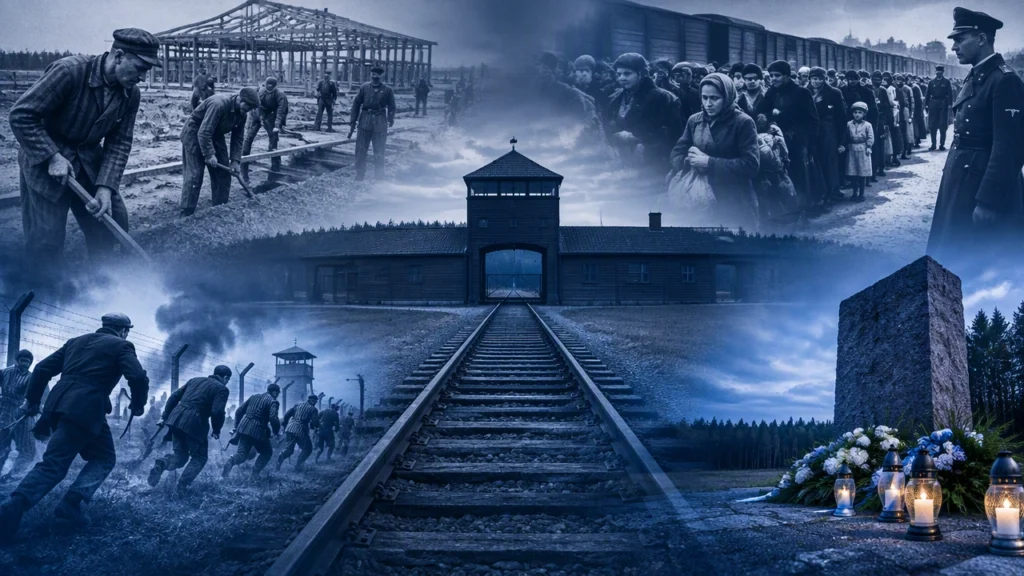
Sobibor history is often reduced to a date, a death toll, or a single act of resistance. A careful account requires more: how the camp was built, how its killing system changed, what can and cannot be established about individual victims, and how survivors and researchers have shaped public memory. Sobibor was a Nazi German camp in occupied Poland, central to the so-called Operation Reinhard, the systematic murder of European Jews. Its history runs from construction in 1942 through the prisoner uprising of October 1943, destruction of the site, and decades of archaeological and archival work.
Why Sobibor was built
In 1941, Nazi Germany began planning the mass murder of European Jews alongside its war of conquest and occupation. The General Government, the German-administered territory in occupied Poland, became a major site of killing. Fixed facilities were developed at Bełżec, Sobibor, and Treblinka, while mass shootings also continued across occupied eastern Europe.
Sobibor was chosen partly for its location beside the Bug River and near the Chelm–Włodawa railway line. Rail access allowed the regime to bring large groups of people to the site with little advance notice. Construction began in the spring of 1942, using forced labor, including Jewish workers brought from nearby settlements and from ghettos.
The camp was organized into three areas. The first contained the reception and registration zone, where arriving transports were met. The second held prisoner barracks and workshops. The third, often described as the camp within the camp, contained the killing facilities. This layout was intended to conceal the purpose of the site from people arriving at the last stage of their journey.
Operation Reinhard and the killing process
Deportations to Sobibor intensified after the first killing operation in May 1942. Trains arrived from ghettos across occupied Poland and from other parts of Europe, including Germany, Austria, Czechoslovakia, the Netherlands, and France. The largest groups came from the Netherlands, although the composition of transports changed over time.
On arrival, SS and police personnel separated most new arrivals from those selected for forced labor. Deception was central to the process: prisoners were told they were being taken to a transit camp for work or resettlement, and the killing area was concealed behind a narrow, fenced passage known to prisoners as the tube. Luggage and clothing were confiscated. People were driven into gas chambers, where carbon monoxide from engine exhaust killed them. Bodies were buried, then later exhumed and burned in open-air pits as the killing system expanded.
Estimates of the number of people murdered at Sobibor vary because transport records are incomplete and postwar investigations relied on partial documentation. A commonly cited range is approximately 167,000 to 250,000 victims, with higher figures sometimes proposed. The uncertainty is historical, not a reason to treat the crime as vague: the deportations, camp records, survivor testimony, and postwar trials together establish the scale and purpose of the killing operation.
Prisoner life, forced labor, and resistance
A smaller prisoner population was kept alive to work. These prisoners sorted confiscated belongings, repaired clothing, worked in gardens and workshops, and maintained camp infrastructure. They lived under extreme deprivation and constant threat of arbitrary violence or execution. Disease, exhaustion, and punishment were common.
Resistance was dangerous because prisoners were closely watched and isolated from the outside world. Even so, information moved through the camp. Prisoners learned that Sobibor was not a transit site and that selection did not offer lasting protection. Earlier escapes elsewhere in the camp system, as well as news of German defeat at Stalingrad and other turning points, strengthened the belief that action might be possible.
By 1943, a clandestine organization had formed among prisoners, led in large part by Soviet prisoners of war, including Alexander Pechersky, alongside Polish Jewish prisoners such as Leon Feldhendler. The plan was to kill selected SS and guard personnel in stages, then break out through the main gate.
The uprising of 14 October 1943
The uprising began on 14 October 1943. Prisoners attacked guards and officers with axes, knives, and other improvised weapons, then rushed the camp gate. Guards in towers opened fire, and minefields and barbed wire made escape difficult. Roughly 300 of the several hundred prisoners in the camp fled, but most were later recaptured and killed. About 40 to 50 survived the war.
In the aftermath, the SS ordered the camp dismantled. Prisoners who remained were shot, buildings were burned, and the site was ploughed in an effort to erase evidence. Nevertheless, documents, physical remains, and witness accounts survived. The uprising did not stop the wider genocide, but it demonstrated organized resistance under extreme conditions and became one of the best-known acts of revolt in the Nazi camp system.
What happened after the camp closed?
After the war, several Sobibor-related trials took place in different countries. German courts examined the roles of camp commandants, SS personnel, and guards, while Polish and Soviet proceedings addressed other participants. Convictions were often limited by evidentiary standards, missing records, and the difficulty of proving individual responsibility. Some perpetrators were never identified or prosecuted.
Archaeological investigations beginning in the early twenty-first century located the remains of gas chambers, prisoner barracks, and perimeter structures. Research also clarified the camp’s layout and the scale of the killing facilities. These findings complemented transport lists, German documentation, and survivor testimony, helping to correct earlier gaps in public understanding.
How Sobibor is remembered
Remembrance at Sobibor has evolved from a largely symbolic memorial into a more historically detailed site. Monuments, museums, and educational programs now address both the victims and the camp’s physical history. Families and national archives continue to identify individuals deported to the camp, restoring names and places to statistics.
The history of Sobibor also raises difficult questions about evidence and memory. Numbers may remain approximate, some personal stories are incomplete, and postwar narratives sometimes emphasized heroism while giving less attention to the everyday experiences of prisoners. Careful remembrance holds these tensions together: it acknowledges uncertainty without minimizing the crime, and it treats the uprising as part of a longer history of coercion, survival, and witness.
Understanding Sobibor history: what happened at the camp between 1942 and 1943? therefore means following the chronology closely: construction, deportation, forced labor, mass murder, resistance, destruction, and later reconstruction through research. That sequence keeps the camp’s history grounded in evidence and in the people who experienced it.