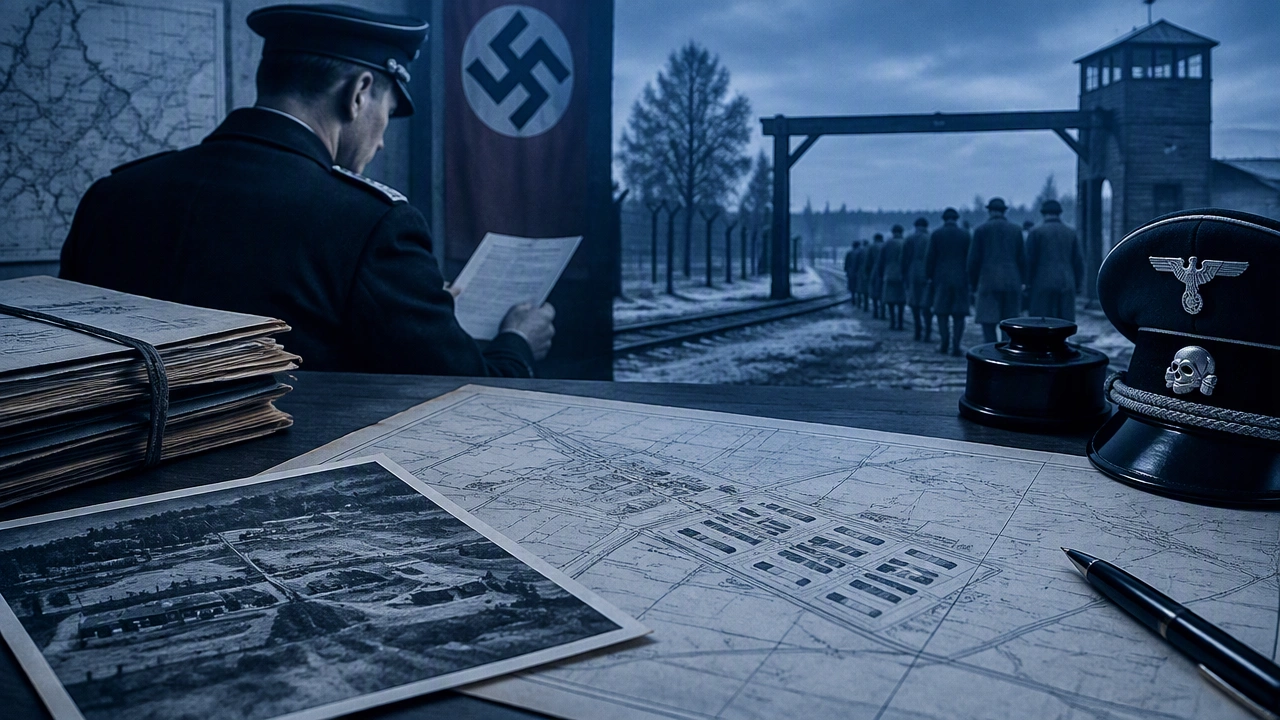
Why Was Sobibor Built? Administrative and Ideological Decisions Behind the Camp
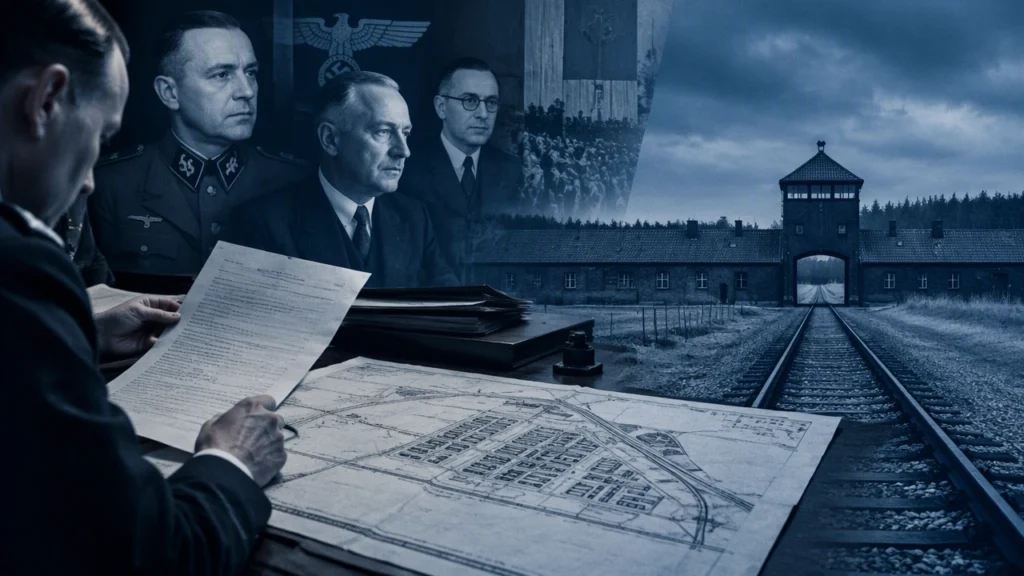
The history of Sobibor must be told with care because it concerns mass murder, state planning, and the lives of people who were deliberately reduced to categories on paper. Sobibor history is not only a story of a place; it is a record of decisions made by institutions, officials, and perpetrators who treated killing as a logistical problem. Understanding why the camp was created requires tracing how Nazi ideology, war, occupation policy, and bureaucratic organization converged.
Why was Sobibor built, and who decided to establish it?
The short answer is that Sobibor was built as part of the Nazi plan to murder Europe’s Jews. Its creation was not the result of a single order or one person’s idea. It emerged from a chain of policies that moved from persecution and segregation to mass shooting, and finally to centralized killing in camps. The long-term question, why was Sobibor built, and who decided to establish it, therefore has several connected layers.
After coming to power in 1933, the Nazi regime isolated Jews from public life through laws, social exclusion, and violence. The aim was first to force Jews to leave Germany and later to control and concentrate Jewish populations under German rule. These early measures reflected an ideology that portrayed Jews as an enemy group responsible for Germany’s supposed national decline. As war began in 1939, persecution expanded across occupied Europe, and the regime’s ambitions grew more radical.
From persecution to occupation policy
The invasion of Poland brought under German control a large Jewish population and created new pressures for segregation. ghettos were established to confine Jews, exploit their labor, and hasten death through hunger, disease, and overcrowding. Administrative bodies, local authorities, police units, and occupation officials participated in this system. Decisions were communicated through orders, reports, budgets, transport schedules, and personnel assignments, making mass persecution appear to those carrying it out as routine work.
After Germany invaded the Soviet Union in June 1941, Nazi policy escalated. Ideological war against Jews, communists, and perceived racial enemies was joined by mass shootings carried out by SS units, police formations, and other collaborators. Killing sites multiplied across occupied Soviet territory. These operations revealed both the regime’s intent and its practical problems: shootings were psychologically and physically demanding for the killers, difficult to conceal, and dependent on local conditions. Nazi leaders increasingly sought more controlled and efficient methods of murder.
The decision to build killing centers
By late 1941 and early 1942, discussions within the German leadership had turned toward deporting Jews from across Europe and killing them in specially selected locations. The camp at Chełmno had already demonstrated the use of gas vans. In occupied Poland, the regime developed a network of camps with different functions. Auschwitz-Birkenau combined forced labor with killing; Treblinka and Sobibor were designed primarily for mass murder through deception and industrialized procedures.
The decision to establish Sobibor belonged to this broader policy. It was connected to the so-called Reinhard operation, named after Reinhard Heydrich, a senior SS official who had played a central role in coordinating the murder of European Jews. Heydrich was assassinated in June 1941, but the planning process continued under his successors and the SS leadership. The operation’s name did not describe a single command structure; it referred to a coordinated program of deportation, theft, confinement, and killing.
Historians have identified key centers of responsibility, including the Reich Security Main Office, which coordinated security and racial policy, and SS leaders in the General Government, the German-occupied central Polish territory. Heinrich Himmler, head of the SS, oversaw the expansion of the camp system. Odilo Globocnik, an SS and police leader in the Lublin district, was a major organizer of the Reinhard camps. Local construction, labor, transport, and supply decisions were handled by a range of officials and contractors. Responsibility was distributed, but it was not vague: specific institutions and individuals issued orders, allocated resources, and monitored results.
Administrative choices that shaped the camp
Sobibor was located in eastern Poland near the village of Sobibór, in an area chosen for its relative isolation and access to rail connections. The rail line allowed transports to arrive directly at the camp, reducing public visibility and simplifying the movement of victims. The site also reflected the desire to place killing facilities outside Germany while keeping them within the administrative sphere of the General Government.
The camp’s design expressed the logic of deception. New arrivals were told they were being taken to a transit or work camp. They were ordered to hand over valuables, undress, and prepare for showers. A path led them to gas chambers where carbon monoxide, produced by engines, killed them. Other prisoners were forced to sort stolen belongings, cut hair, handle bodies, and bury or burn remains. These tasks were organized through barracks, watchtowers, fences, and a strict hierarchy of guards and prisoner functioners.
Bureaucratic decisions determined who would be transported, when trains would run, how luggage would be processed, and how stolen property would be catalogued. Clothing, shoes, food, and household goods were shipped back to Germany or distributed through Nazi channels. The murder of Jews was therefore intertwined with theft on a vast scale. Records, receipts, and reports turned victims into administrative units and converted their possessions into state resources.
Ideology and the meaning of the decisions
The ideological dimension cannot be separated from the administrative one. Nazi doctrine defined Jews as a racial threat that had to be removed from the imagined national community. War made radical action seem possible to the perpetrators, while occupation provided territory, institutions, and captive populations. Officials framed killing as a defensive necessity and a historical mission. This language allowed decision-makers to present mass murder as a rational response to invented dangers.
At the same time, the regime relied on ordinary organizational skills: planning, coordination, supervision, and reporting. The camp system translated racial fantasy into operational reality. Sobibor was built because leaders chose to pursue total murder and because institutions below them organized the conditions that made it possible.
Opening, operation, and revolt
Sobibor began operations in the spring of 1942, during a phase of intense deportation from ghettos in occupied Poland. Transports later arrived from other parts of Europe, including Germany, the Netherlands, France, Slovakia, and the Soviet Union. Most people who entered the camp were killed soon after arrival. A small number were selected for forced labor, only to be replaced when they became exhausted or no longer useful.
In October 1943, prisoners organized an armed revolt. A group of prisoners killed a number of guards and attempted to escape. Some survived, and their testimonies, together with evidence gathered after the war, helped establish what had happened at the camp. After the revolt, the SS dismantled much of Sobibor and attempted to erase physical evidence. The killing operation nevertheless left records, sites, and witnesses whose histories continue to demand careful interpretation.
Responsible decisions, lasting responsibility
Answering why was Sobibor built, and who decided to establish it means looking beyond a single date or name. The camp resulted from escalating ideological commitments, wartime conquest, institutional planning, and distributed responsibility. Senior officials set the direction; middle-ranking administrators translated policy into schedules and budgets; local personnel implemented it; and economic structures benefited from stolen property and forced labor.
Telling this history carefully means avoiding both abstraction and false simplicity. The victims were individuals with families, communities, languages, and lives. The perpetrators were not acting outside history; they made choices within systems they built, maintained, and used. Sobibor’s creation shows how administrative language can normalize atrocity and how ideological conviction can turn bureaucratic routine into mass killing.