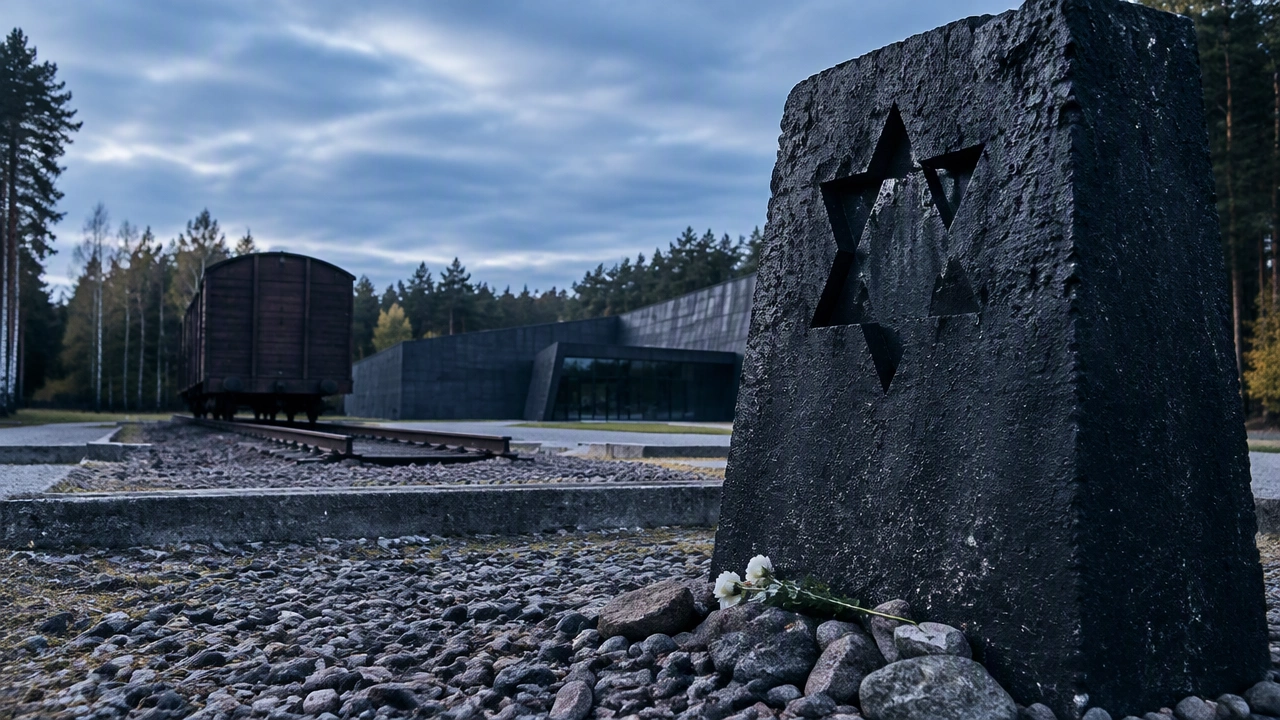
What Remains Visible at the Sobibor Memorial and Museum Today
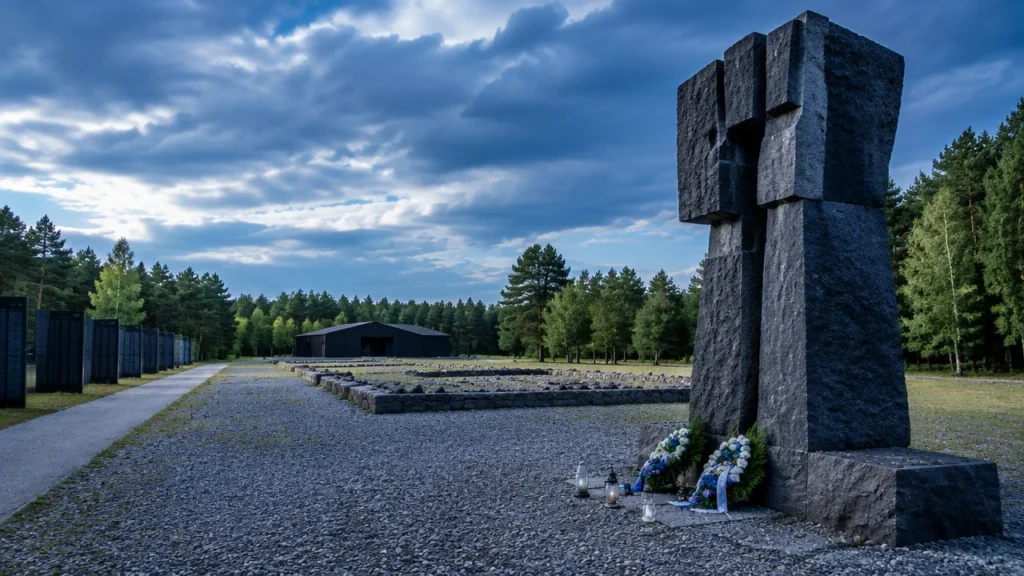
The history of Sobibor must be approached with care. The former camp in eastern Poland was a site of mass murder, and the ground itself carries the weight of what happened there. Today, the memorial and museum invite visitors to look closely, listen carefully, and resist easy conclusions. This guide follows the landscape as it exists now, considers what archaeology has revealed, and offers practical guidance for responsible visiting.
Understanding the memorial landscape
Visitors first encounter a place shaped by absence as much as by surviving structures. The camp was deliberately dismantled after the 1943 uprising, and postwar changes further altered the site. What remains is a carefully interpreted terrain: pathways, marked foundations, reconstructed elements, and areas where the earth itself has been studied. The memorial does not present a single, complete building or a tidy reconstruction. Instead, it asks people to move through a sequence of spaces and to notice how memory is inscribed in the land.
The landscape is organized around the history of the camp and its victims. Signage, maps, and guided routes help visitors understand the relationship between the camp’s different zones, including the areas associated with arrival, forced labor, and killing. Because the site is both a place of remembrance and an active archaeological project, some sections may be closed, under investigation, or intentionally left undisturbed. Changes in access are not an attempt to hide history; they often reflect the need to protect fragile evidence and to maintain respect for burial ground.
Reading paths, markers, and reconstructed elements
Paths guide movement without turning the site into a conventional monument. Markers identify significant locations, while reconstructions clarify how the camp functioned without claiming to reproduce every original detail. Visitors should read these elements as evidence of interpretation rather than as a complete replica. The difference matters: a reconstructed wall or railway element can help explain scale and process, but it is not the original fabric of the camp.
The surrounding forest and open ground also shape the experience. Sound, weather, and the long sightlines affect how visitors perceive distance and concealment. These physical sensations are part of the history, because the camp was designed to separate prisoners from the outside world and to make killing efficient. A thoughtful visit allows time to notice these features without turning them into spectacle.
Archaeological findings and what they tell us
Archaeology at Sobibor has concentrated on recovering the physical traces that documentary sources alone cannot show. Excavations have examined foundations, fences, transport routes, personal objects, and remnants of the camp’s infrastructure. Finds such as coins, buttons, household items, and fragments of clothing can seem small, yet they reconnect abstract numbers with individual lives. Each object is evidence of a person who arrived, waited, worked, or died under conditions of extreme violence.
Archaeological work also helps clarify the camp’s layout. Researchers compare surviving features with photographs, plans, testimony, and historical records. This comparison can confirm details, revise earlier assumptions, or reveal where the landscape was altered after the war. The process is gradual because the site is complex: layers of soil, later construction, vegetation, and previous interventions all affect what can be identified.
It is important to distinguish between what has been excavated, what remains buried, and what has been interpreted from indirect evidence. Not every question can be answered, and uncertainty is a legitimate part of responsible history. The museum and memorial present findings in ways that acknowledge both the strength and the limits of the evidence. Visitors should be cautious about claims that promise a complete or final picture.
From material traces to historical understanding
The objects and structures recovered at Sobibor support a wider account of the camp’s operation. They help explain how arrivals were processed, how prisoners were separated from their possessions, and how the site was organized to conceal murder from view. They also situate Sobibor within the broader system of Nazi killing centers and the Holocaust in occupied Poland.
Archaeology does not replace testimony or written records. Rather, it places those sources in conversation with the physical environment. A documented transport list gains another dimension when matched with personal belongings recovered from the ground. A survivor’s account becomes more legible when the distances, barriers, and sightlines described can be located in the landscape.
Visitor responsibilities at the memorial
A visit to Sobibor is an act of witness, not tourism in the ordinary sense. Visitors should follow marked routes, obey staff instructions, and avoid entering restricted areas. Photography rules should be checked in advance and respected on site; some places call for silence or prohibit images. Dress and behavior should reflect the fact that this is a burial site and a place of mourning for families and communities.
It is equally important to prepare intellectually. Read basic historical context before arriving, and allow enough time for the museum exhibits and outdoor areas. Ask questions that are grounded in evidence: how do curators know what happened in a particular location? Which findings are original, and which elements are reconstructions? How do historians handle conflicting testimony?
Finally, visitors should carry the experience beyond the gate. Share accurate information, avoid reducing the history to dramatic anecdotes, and remember that the victims were people with names, families, and lives before persecution. The question What remains visible at the Sobibor memorial and museum today? has a layered answer: physical traces, carefully interpreted evidence, and the continuing responsibility to protect the dignity of those who were murdered there.