Survivor Testimonies from Sobibor: How Eyewitness Accounts Were Recorded, Compared, and Used as Historical Evidence
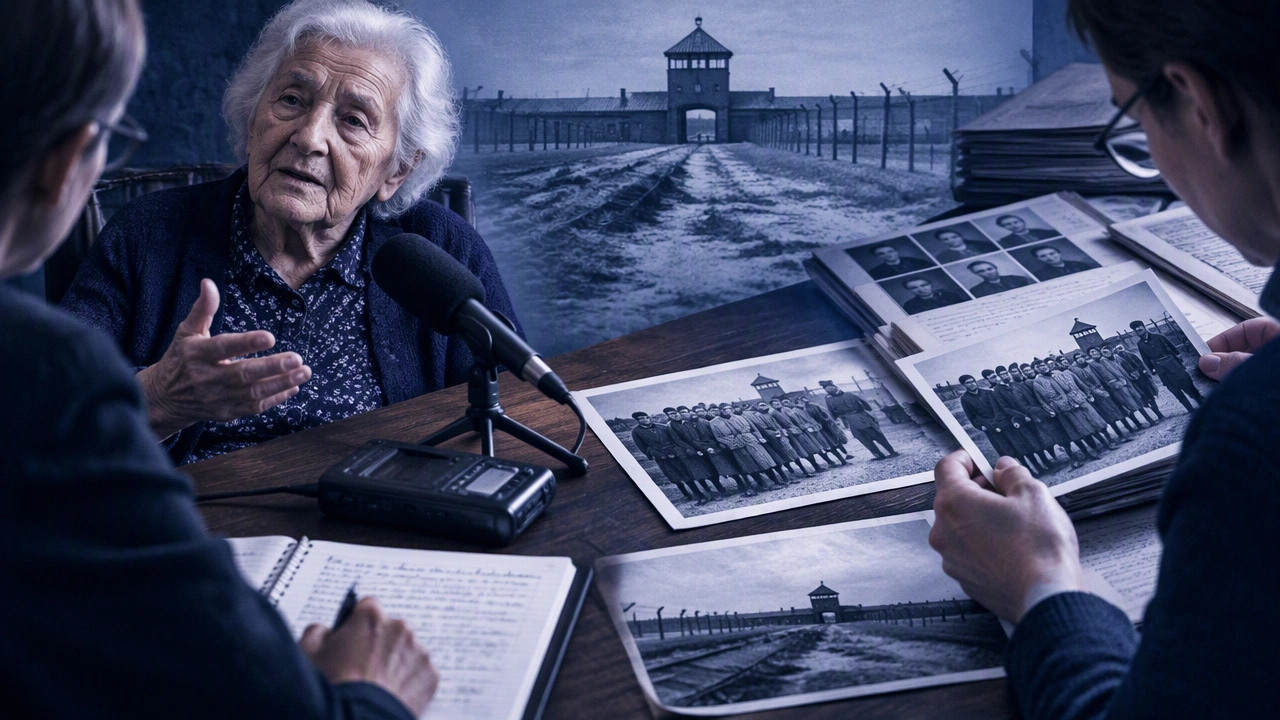
Survivor testimonies from Sobibor occupy a unique place in Holocaust history. Because the SS destroyed most camp records and later dismantled the site, researchers have relied on carefully collected witness statements to reconstruct what happened. This article explores how those testimonies were recorded, compared, and used as evidence, and it highlights which accounts describe daily life and the escape from Sobibor within the wider frame of Sobibor history.
Why survivor testimony matters for Sobibor
Sobibor was an extermination camp operated by Nazi Germany in the occupied Lublin District of Poland. In October 1943, a revolt led by prisoners, many of them Soviet prisoners of war, resulted in the largest successful escape from a Nazi death camp. After the uprising, the SS began closing the camp and later tried to erase it. Physical evidence was limited, and many witnesses perished. In this context, the memories of those who survived became central to understanding the camp’s functions, layout, daily routines, and the planning and execution of the revolt.
Testimony is not a simple mirror of events. It is shaped by memory, trauma, language, and the conditions under which it is collected. Responsible historians treat witness accounts as essential evidence while also comparing them with one another and with whatever documentary, archaeological, and aerial evidence exists. For Sobibor, this careful approach has allowed scholars to build a layered picture of the camp and to test specific claims about dates, locations, and actions.
How testimonies were recorded
Witness accounts from Sobibor were gathered across decades and in different settings, each of which shaped the record.
- Immediate postwar statements: Right after liberation, some survivors spoke to local authorities, Jewish organizations, or allied investigators. These early statements can be especially valuable for details that later recede from memory, though they may also reflect the stress and confusion of the moment.
- Formal investigations: In the late 1940s and 1950s, bodies such as the Central Jewish Historical Commission in Poland collected depositions. Later, national authorities in several countries gathered statements for legal proceedings. These sessions were often structured, with questions about camp layout, work duties, and the sequence of events.
- Court testimony: The 1966 Sobibor trial in Hagen, Germany, and other proceedings produced detailed testimony under oath. Survivors described roll calls, forced labor, the selection process, the camp’s internal zones, and the planning of the revolt. Cross-examination pushed witnesses to clarify dates, distances, and roles.
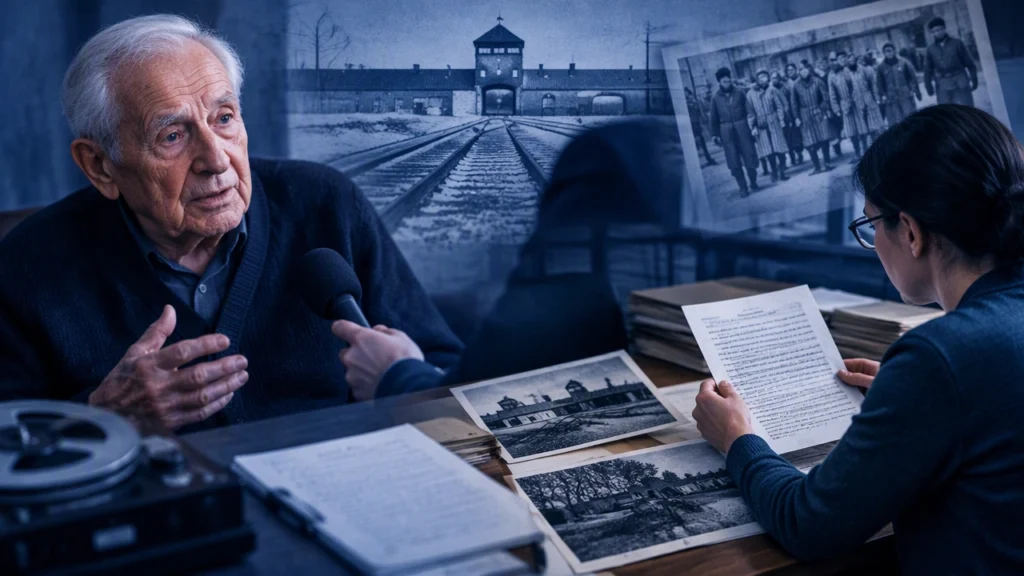
- Oral history projects: From the 1970s onward, institutions such as Yad Vashem, the United States Holocaust Memorial Museum, and regional archives recorded long-form interviews. These projects favored open-ended narration, allowing survivors to describe daily routines, emotions, and relationships as well as pivotal events.
- Memoirs and published accounts: Some survivors, including Thomas Blatt and Filip Bialowitz, later published memoirs that synthesized memories gathered over years. Memoirs are valuable but should be read alongside earlier statements to note how emphasis and detail evolve over time.
Across these formats, the best practice has been to record, transcribe, and preserve testimony with attention to context: who the witness was, when and where the interview occurred, and what questions were asked.
Comparing accounts to build evidence
No single testimony can stand alone as the definitive account of a complex site like Sobibor. Historians therefore compare multiple statements to identify patterns, resolve contradictions, and test specific claims.
- Corroboration: When several survivors describe the same feature, such as the camp’s zones, the sorting of clothing, or the timing of roll calls, researchers treat that convergence as stronger evidence.
- Contradiction: Differences in dates, names, or sequences are noted rather than ignored. Such contradictions may reflect different vantage points, the fog of memory, or deliberate deception by the SS. They prompt further questions rather than automatic dismissal.
- Detail and specificity: Accounts that include concrete details, such as the location of a workshop or the order of events on the day of the revolt, can be checked against maps, aerial photographs, and archaeological findings.
- Change over time: Comparing early depositions with later interviews helps scholars see how narratives mature. Some details become sharper; others fade. Tracking these shifts is part of responsible analysis, not a reason to discard later memories.
By triangulating testimony with documents and material evidence, researchers have been able to refine the timeline of the revolt, identify roles played by different groups of prisoners, and better understand the camp’s daily运作.
Daily life in survivor accounts
Many testimonies describe the routines that structured prisoner existence under constant threat. Common themes include:
- Forced labor: Prisoners worked in sorting areas, workshops, and maintenance details. Testimonies describe tasks such as repairing clothing, cleaning paths, and carrying supplies. Work assignments could shift, and survival often depended on being useful to the SS or their auxiliaries.
- Hunger and disease: Multiple accounts stress inadequate food, contaminated water, and illness. These details recur across interviews conducted years apart, suggesting a consistent core of memory about deprivation.
- Violence and fear: Survivors describe sudden beatings, public punishments, and the constant awareness that selection or arbitrary killing could occur at any moment. Many accounts note the psychological pressure of living beside the killing areas while being cut off from full information.
- Camouflage of the camp’s purpose: Several witnesses recall the SS effort to present Sobibor as a transit or labor camp. Prisoners were ordered to maintain appearances, and new arrivals were often deceived about the camp’s true function.
These descriptions are most convincing when they appear across independent testimonies and when they fit with what is known from other sources about camp policy and infrastructure.
Testimonies about the escape from Sobibor
The October 1943 revolt is the most widely studied episode in Sobibor’s history, and survivor accounts are central to understanding it. Key points often described by witnesses include:
- Planning and leadership: Several survivors describe how prisoners, including Soviet POWs and Jewish inmates from different countries, organized a plan to kill SS officers individually and then break out in a group. The coordination required secrecy, timing, and trusted networks within the camp.
- Method: Accounts explain that small teams lured targets to isolated locations under pretexts such as fitting uniforms or tools. The aim was to reduce the chance of alarm and to accumulate weapons.
- The breakout: Survivors recall the moment when the plan became known to the wider prisoner population, the rush to the exit, and the crossfire that followed. They describe confusion, casualties, and the terrain outside the camp, including fences, minefields, and nearby forests.
- Aftermath: Testimonies follow survivors into hiding, capture, and, for some, later imprisonment or front-line service. A number of accounts detail how survivors regrouped, found local assistance, or joined partisan units.
Among the most cited narratives are those of Thomas Blatt and Filip Bialowitz, whose memoirs and interviews describe planning, participation, and escape. While each account is personal and partial, comparing them with other statements helps scholars reconstruct the revolt’s phases and evaluate the roles of different participants.
Using testimony as historical evidence
Treating survivor testimony as evidence means more than quoting vivid passages. It requires:
- Contextualization: Placing the account within the witness’s path through the camp, their work details, and their relationships.
- Source criticism: Asking when the statement was made, under what conditions, and for what audience.
- Correlation: Checking the account against other testimonies, documents, photographs, and, where possible, archaeological results.
- Transparency: Acknowledging gaps, uncertainties, and the limits of memory.
This method does not diminish the authority of survivors. Instead, it honors their experiences by integrating them into a historically rigorous framework.
Which survivor testimonies describe daily life and the escape?
Readers often ask which survivor testimonies describe daily life and the escape from Sobibor. The clearest path is to consult multiple forms of testimony side by side:
- Early depositions collected by Jewish historical commissions and postwar investigators for granular details about camp routines and the first moments of the revolt.
- Court records from the Hagen trial and related proceedings for structured, cross-examined accounts of work assignments, movement within the camp, and the sequence of killings during the uprising.
- Oral history interviews preserved by major Holocaust institutions for extended narratives that place daily life and the escape within a full life story.
- Published memoirs, such as those by Thomas Blatt and Filip Bialowitz, for reflective, first-person syntheses that can guide further comparison with archival material.
By moving across these sources, readers can see where accounts align, where they diverge, and how scholars use those patterns to build evidence. In this way, the voices of survivors remain central to understanding Sobibor, not as isolated stories, but as parts of a carefully assembled historical record.