How Resistance Was Organized Inside Sobibor
The history of Sobibor is often told through the machinery of killing: the deception of arrival, the selection process, the gas chambers, and the efforts to erase evidence. Yet within that confined system, prisoners also built a clandestine structure for survival. Tracing how they gathered information, established trust, and prepared an escape reveals the difficult choices behind the October 1943 uprising.
Camp hierarchy and the limits of knowledge
Sobibor was part of Operation Reinhard, the Nazi German program that used occupied Poland as a site for the mass murder of Jews. The camp was divided into functional zones, and prisoners were assigned to different sectors. Some worked in sorting and repairing clothing, others in maintenance, transport, kitchens, or workshops. A small group of Jewish prisoners, many of whom had been trained or coerced into operating parts of the camp, came into contact with details that could be useful to a resistance network.
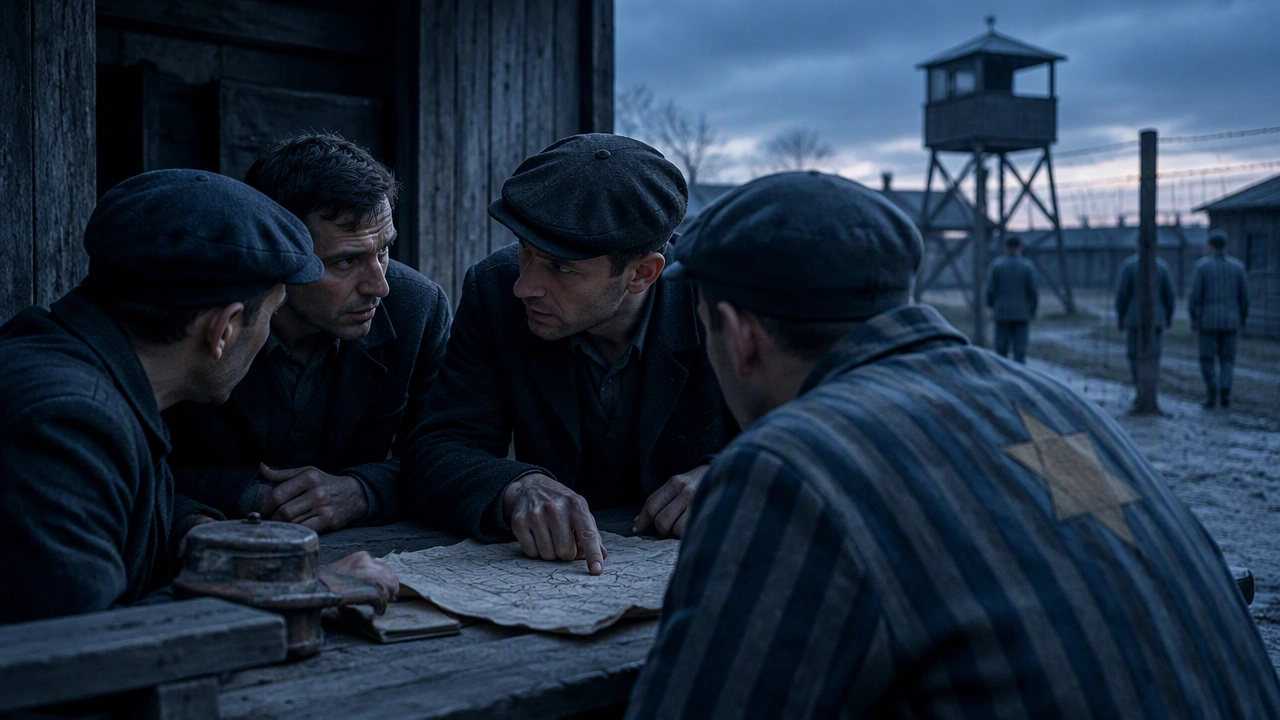
Information moved unevenly. A prisoner working near the arrival ramp might learn about the timing of transports, while someone in a workshop might hear about guard routines or shortages of tools. The camp’s separation meant that no single person held a complete picture. Resistance therefore depended on careful collection: noticing schedules, identifying guards, recording where weapons or equipment were kept, and understanding which movements could be explained as routine work.
Trust as an operational problem
Building trust was dangerous because betrayal could lead to execution. Prisoners had to judge whether a new acquaintance was reliable, whether a conversation was genuine, and whether a suggestion might be a trap. Small, repeated acts of cooperation helped establish credibility: sharing food, warning someone about a punishment, or keeping a promise during a work detail. Trust was not simply a feeling; it was tested through practical reliability.
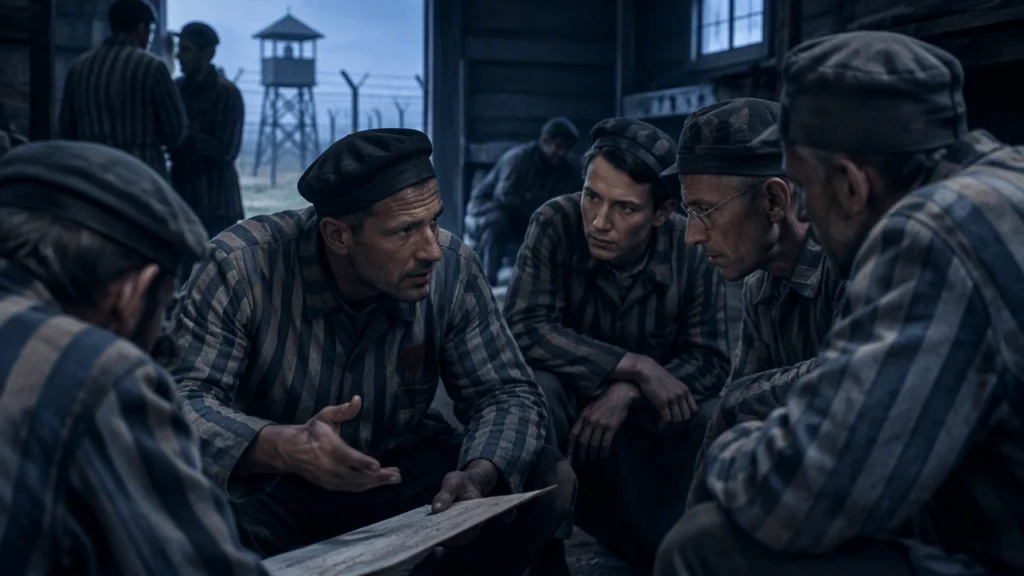
Communication also had to remain discreet. Meetings happened during work, in workshops, or in moments when guards were distracted. Coded language and indirect references reduced the risk of being overheard. The network appears to have grown through personal connections rather than a formal membership list, which made it adaptable but also fragile. If one link was broken, the plan could stall or collapse.
From shared intelligence to a plan
As information accumulated, prisoners began to shape it into a sequence of actions. The central question was not only how to leave a barracks or a work detail, but how to create enough confusion to prevent an immediate, organized response. The plan required knowledge of guard posts, the location of weapons, the routes out of the camp, and the likely behavior of other prisoners.
Preparation involved practical skills as well as strategy. Some prisoners used their access to workshops to conceal or modify tools. Others studied the movements of particular guards, learning when a person was likely to be alone. The resistance leadership had to decide who would act, in what order, and how to signal the start of the uprising. These decisions were shaped by the camp’s geography and by the need to move quickly once the first blow was struck.
Leadership without a single center
The uprising at Sobibor was not the work of one isolated hero. It emerged from a coalition that included prisoners with different backgrounds, languages, and experiences. A key figure was Alexander Pechersky, a Soviet Jewish prisoner of war who had been transported to the camp. His military experience and familiarity with organized action were important, but the plan also relied on prisoners who knew the camp’s daily rhythms from the inside.
That combination mattered. External knowledge could suggest broad tactics, while internal knowledge determined whether those tactics were possible. A route that looked clear on a map might be blocked by a fence, a locked gate, or a guard who appeared without warning. The resistance had to reconcile ambition with the severe limits imposed by surveillance and punishment.
Deception, timing, and the moment of revolt
The final plan used deception to isolate individual guards and seize weapons. Prisoners were organized into small groups, each assigned to a specific target or task. The timing had to be synchronized because a premature alarm would close the camp’s exits, while delay would allow guards to consolidate control. The uprising began on 14 October 1943, when selected guards were lured into workshops or other controlled spaces and killed.
After the initial attacks, groups of prisoners ran toward the perimeter. Some crossed minefields or fences; others were shot as they fled. The escape was not a clean breakout. It was a chaotic passage through a landscape designed to kill those who left the authorized paths. Even so, the action broke the camp’s routine and demonstrated that the system of control was not absolute.
After the escape
Survivors who escaped faced further danger. Nazi German authorities and local collaborators searched for them, and some were recaptured or betrayed. Those who survived carried fragmented accounts that later formed part of the historical record. The camp itself was dismantled after the uprising, and the Nazis attempted to destroy evidence of the killing operation.
Understanding how the underground resistance organized itself inside Sobibor requires attention to ordinary details: who spoke to whom, what could be learned from a work assignment, and how a promise made in a barracks could become part of a larger plan. The escape did not end the destruction carried out at Sobibor. It does show how prisoners converted limited knowledge into collective action under conditions of extreme risk.
Why the organization mattered
The resistance was effective not because it possessed abundant resources, but because it created a structure for sharing scarce information. Trust reduced the cost of communication. Careful planning converted observations into sequences of action. Leadership connected external experience with internal knowledge of the camp. None of these elements guaranteed success, but together they made an uprising conceivable.
For readers approaching Sobibor history, this perspective adds a necessary dimension to the record. The camp was a place of mass murder, but it was also a place where prisoners sought agency under impossible conditions. Their intelligence network, trust relationships, and escape preparations reveal how resistance could be organized when every conversation carried the possibility of discovery.